The right lighting can completely change how you use your garden shed. Whether it is a practical storage space, workshop, hobby room or somewhere you regularly spend time, good shed lighting makes the building safer, more functional and far more enjoyable to use.
The good news is that adding lighting to a shed does not always mean running mains electricity down the garden. From rechargeable LEDs to dedicated solar-powered systems, there are plenty of practical shed lighting ideas to suit different buildings, budgets and uses.
In this guide, we explore some of the best indoor and outdoor shed lighting options, how to choose the right setup and why solar lighting can be particularly useful for garden buildings.
Before choosing your lights, think about how you actually use your shed.
A small storage shed where you occasionally grab the lawnmower will have very different lighting requirements from a workshop where you might spend several hours working on projects.
Consider:
For most sheds, a combination of general overhead lighting and more focused lighting around benches or work areas provides the most useful setup.
You should also consider where switches will be positioned. Having a light you can turn on immediately when opening the shed door is particularly useful during the darker winter months.
There are several ways to illuminate the inside of a garden building.
LED strips are one of the best options for sheds because they provide plenty of light while using relatively little energy.
They can be installed along ceilings, beams or above workbenches to spread light evenly across the building.
LED technology also produces less heat than many traditional bulbs, making it well suited to compact garden buildings.
Battery lights can work well in small sheds that are only used occasionally.
They require almost no installation and are particularly useful around entrances, shelves or cupboards.
The downside is that batteries need to be replaced or recharged, so they may become inconvenient if you use the shed frequently.
USB rechargeable work lights and lanterns offer another simple solution.
They are portable, inexpensive and useful if you only need temporary lighting. However, you will need to remember to bring them inside periodically for charging.
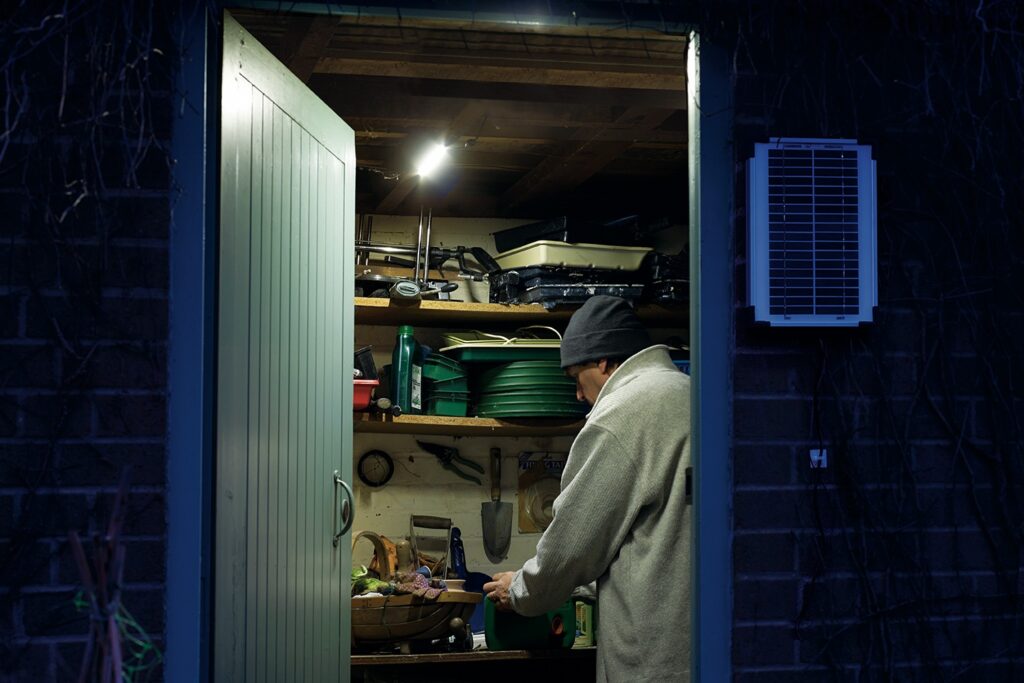
For sheds without a mains electricity connection, solar lighting can offer a more permanent alternative.
A solar panel fitted outside the building charges a battery during the day, allowing LED lighting inside the shed to be powered when required.
This can remove the need to run electrical cables from your house to the bottom of the garden.
Lighting around your shed can be just as useful as lighting inside it.
One of the simplest outdoor shed lighting ideas is installing a motion-activated light above the entrance.
Motion sensors are particularly useful because the light activates automatically as you approach the building. This means you do not have to walk through a dark garden searching for a switch.
Other options include:
If your garden building is used as a summerhouse or entertaining space, warmer decorative lighting can help create a more comfortable atmosphere.
For workshops and storage sheds, brighter functional lighting around the doorway will usually be more useful.
When comparing shed lighting options, brightness is important, but it should not be the only consideration.
Think about the size and layout of your building.
A compact garden shed may only require one central light, while a larger workshop could benefit from several lighting points.
Colour temperature also affects how a space feels. That’s not paint colour, there’s a whole other guide for that.
Cooler white lighting is normally better for workshops and practical spaces because it creates a brighter working environment. Warmer lighting tends to work better for summerhouses, garden rooms and relaxation areas.
You should also consider energy consumption.
Modern LEDs typically provide plenty of illumination without requiring large amounts of electricity, making them an excellent choice for solar-powered systems.
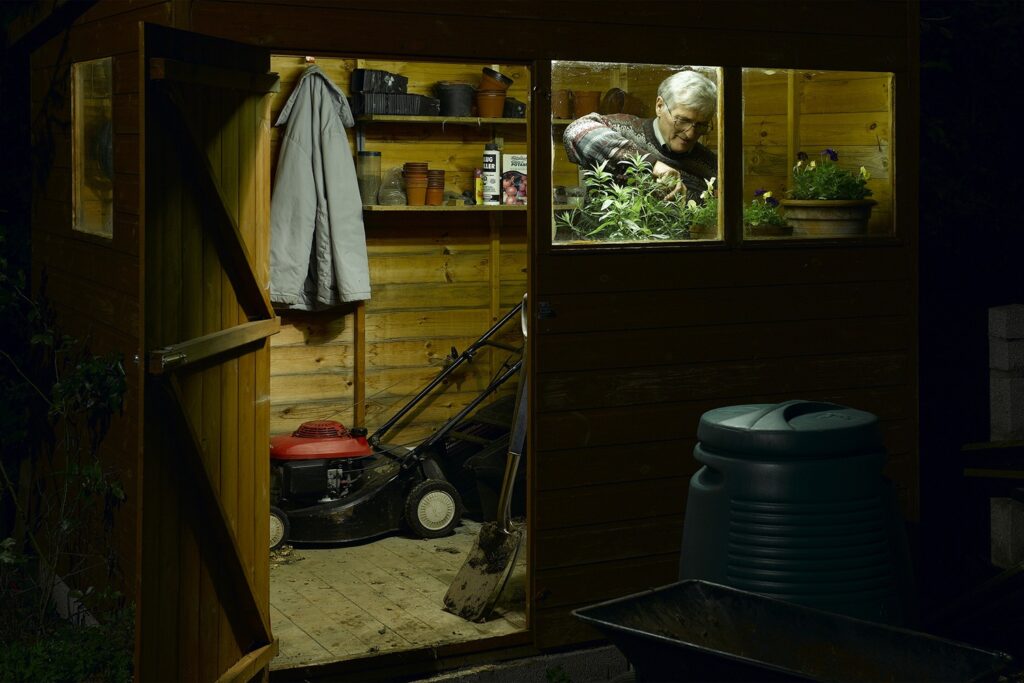
How your lighting is installed will depend on the system you choose.
Battery and rechargeable lights are straightforward because they usually only require a mounting bracket or adhesive fixing.
Solar systems typically involve installing a small solar panel on the outside of the shed and running a cable into the building. If you’re installing the wiring through insulation, ensure there is adequate protection in place.
The solar panel should be positioned somewhere that receives good daylight and is not permanently shaded by trees, fences or nearby buildings.
If you decide to install mains electricity in a detached garden building, electrical work should be completed by a suitably qualified professional.
Always check the manufacturer’s installation instructions for the lighting system you choose.
Solar lighting is particularly useful when your shed is positioned away from the house.
Rather than digging trenches or running electrical cables through the garden, a dedicated solar system allows the building to generate its own power.
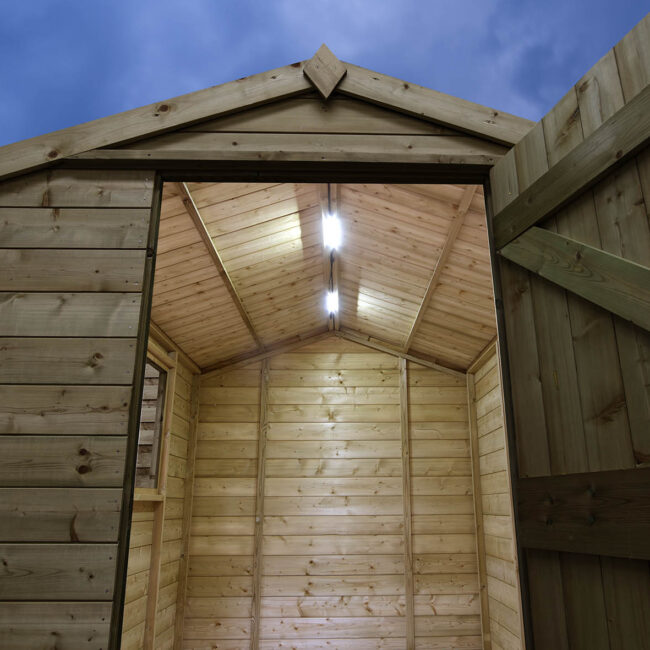
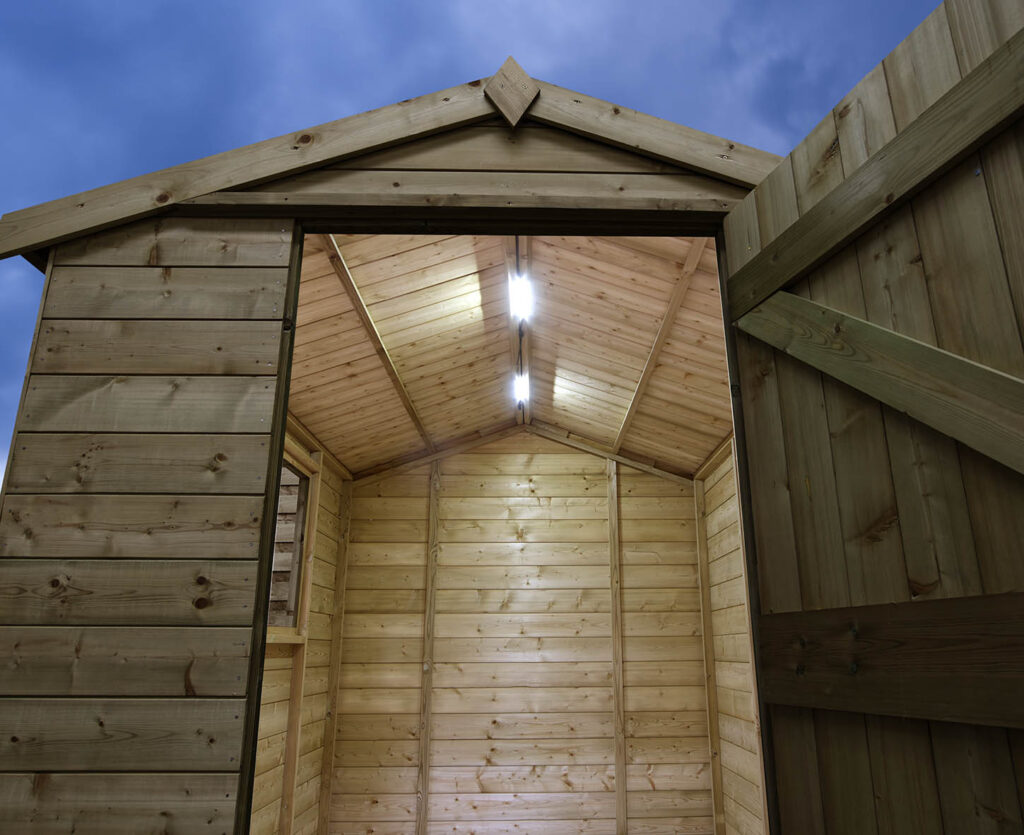
At MCD Garden Buildings, our Hubi Work 16 solar light and power kit is designed specifically for sheds, workshops and similar garden buildings.
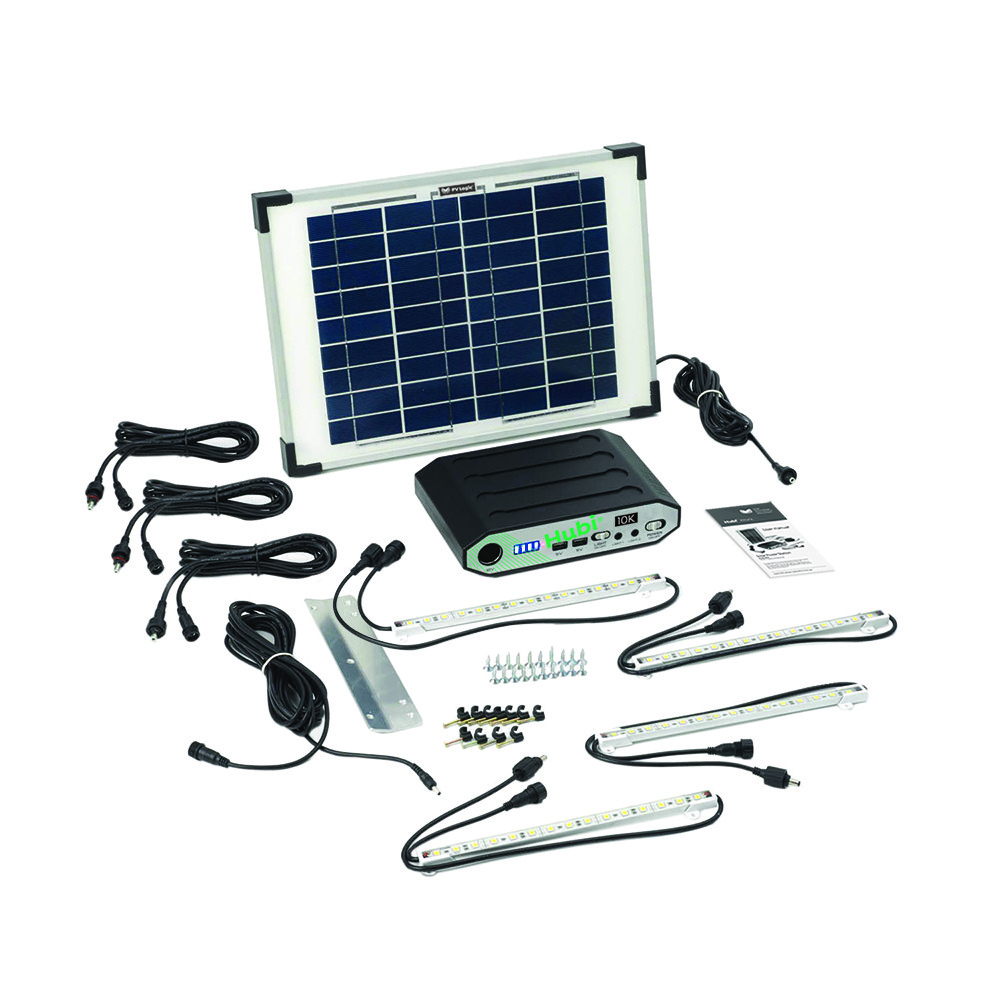
The system includes a 300-lumen LED strip capable of illuminating an area of up to approximately 16m², making it suitable for many small to medium-sized sheds and workshops. It also includes a solar panel and battery hub, allowing energy generated during the day to be stored for lighting later.
Another useful feature is the ability to power or charge compatible devices through USB and 12V connections, giving you more flexibility than a basic standalone solar light.
For a shed without an existing electricity supply, this can be a particularly practical way to introduce reliable lighting without installing mains power.
Solar lighting works best when the panel is positioned to receive as much direct daylight as possible, particularly during winter when daylight hours are shorter.
Shed lighting does not have to be purely functional.
A few carefully positioned lights can make a garden building feel much more considered.
If you have shelves or display areas, small LED strips installed underneath them can provide subtle additional lighting.
For a workshop, placing a dedicated light directly above your workbench can reduce shadows while completing detailed tasks.
If your shed doubles as a hobby room or garden retreat, consider combining practical ceiling lights with softer secondary lighting.
For example, you could use:
Creating different lighting zones allows you to adjust the atmosphere depending on how the building is being used.
Good lighting is one of the simplest upgrades you can make to a garden shed.
Start by thinking about how you use the building, where additional light is required and whether you already have access to mains electricity.
For occasional storage use, battery or rechargeable lights may be sufficient. For workshops and sheds used regularly, a more permanent LED lighting system will usually provide a better experience.
And if mains electricity is not available, solar-powered lighting can provide an effective alternative.
The Hubi Work 16 solar-powered lighting system available from MCD Garden Buildings offers lighting and useful power connections without requiring a mains electricity supply, making it an ideal upgrade for many garden sheds and workshops.
With the right lighting in place, your shed can become a safer, brighter and much more useful part of your garden throughout the year.