If you are searching for how to felt a shed roof, there is a good chance your current roof has started to let you down. Felt splits, lifts, blisters and eventually leaks, and once water gets in, the timber underneath starts to rot.
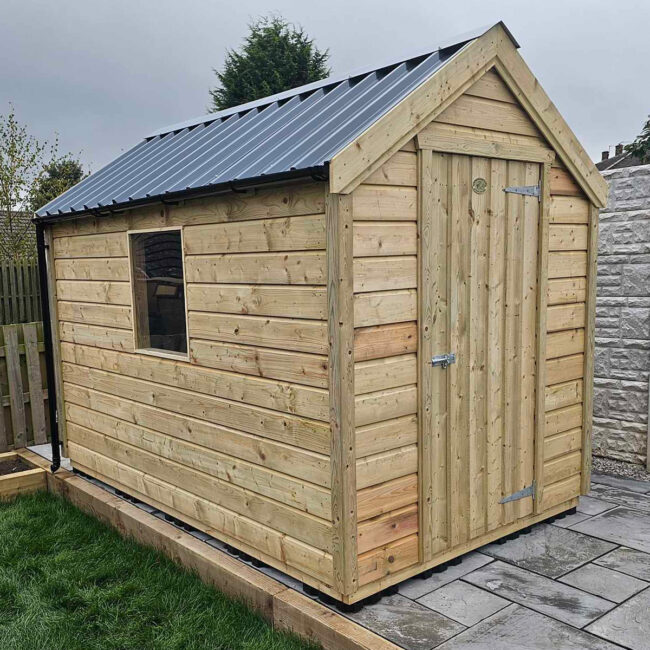
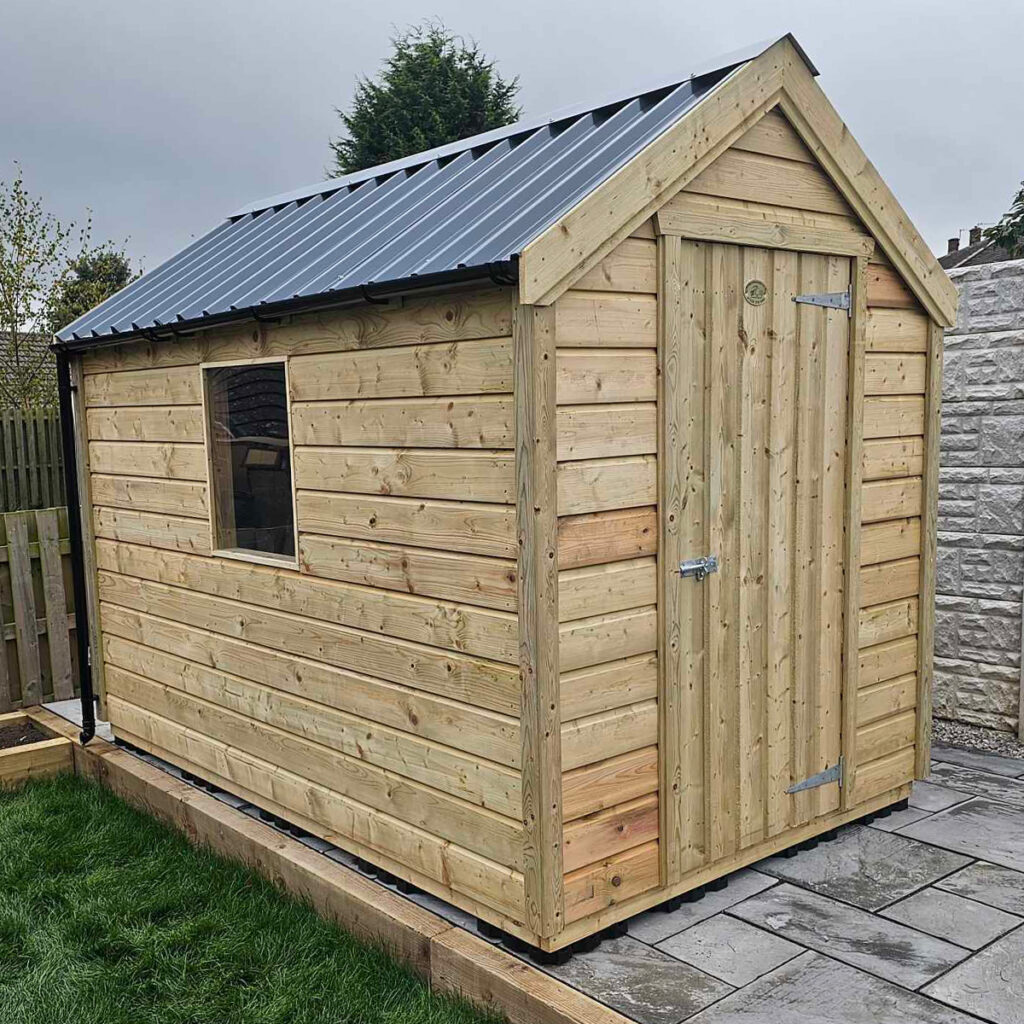
Before you buy another roll of felt, it is worth asking a bigger question: felt vs steel shed roof, which is actually better? This guide compares the two honestly, explains how long each lasts, and shows why every MCD garden building comes with a box-profile steel roof as standard.
Most budget sheds are sold with a thin mineral felt roof because it is cheap and quick to fit. The problem is that felt is the part of a shed that takes the most punishment.
Once water reaches the roof boards, they soften and rot, and that damage can spread into the frame and walls.
Standard shed felt typically lasts around 5 to 10 years, depending on its quality, how well it was fitted and how exposed your garden is. Heavier torch-on felts last longer, but they cost more and are not a quick DIY job.
That means that over the life of a timber shed, a felt roof will usually need repairing or replacing more than once. Every time, it means stripping the old felt, checking the boards and refitting new felt on a dry day.
If the boards underneath are still sound, re-felting may buy you a few more years. If the boards are soft or rotten, the problem is bigger than the felt, and it may be time to consider a replacement shed.
Here is how a typical felt roof compares with the box-profile steel roof fitted to every MCD building.
| Feature | Felt roof | MCD box-profile steel roof |
|---|---|---|
| Typical lifespan | Around 5 to 10 years | Lasts the life of the shed |
| Maintenance | Regular checks, repairs and re-felting | None required |
| Leak protection | Vulnerable at edges, splits and nail holes | Guaranteed leak-free for the life of your shed |
| Wind resistance | Edges can lift and tear | Rigid sheets fixed to the frame with a protective ridge cap |
| Moss and debris | Holds moisture on the surface | Smooth profile sheds water quickly |
| Appearance over time | Fades, cracks and looks tired | Clean, modern lines that stay smart |
A box-profile steel roof does not dry out, split or blister. Once it is on, there is nothing to re-seal, patch or replace. That is time and money you will never have to spend on the roof again.
Our steel roofs are guaranteed to remain leak-free for the lifetime of your shed. You can read the details in our guarantee terms and conditions.
We use commercial-grade box-profile steel, finished with a ridge cap to stop moisture getting in. The ribbed profile makes each sheet rigid, so it copes with wind, heavy rain and snow far better than a soft membrane nailed to boards.

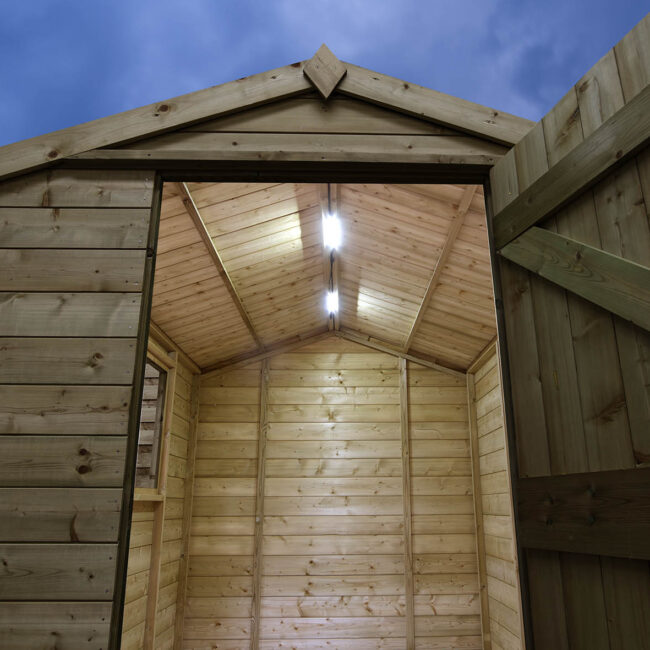
The roof is only as good as what sits below it. Our steel roofs sit on a strong 75mm x 36mm frame, over Scandinavian pressure-treated timber with a full internal breathable membrane. Together, they keep the inside of the building dry and protect the timber from rot.
You can read more about how our roofs are made in The Steel Roofs That Define MCD Quality.
The most common question we get is about noise. Heavy rain is more audible on steel than on felt. For most sheds and storage buildings, this is not an issue. If you plan to use your building as an office or hobby room, insulating and lining the roof will soften the sound noticeably. Our guide on how to insulate a shed covers the options.
The other difference is upfront cost, as steel costs more than a roll of felt. Once you add up years of repairs and re-felting, though, steel usually works out cheaper over the life of the building.
It is possible to fit steel sheets to an existing shed, but it is rarely straightforward. Many budget sheds are not framed to take the fixings properly, and the roof boards are often already damaged by the time the felt fails.
If your shed is more than a few years old and the roof is leaking, it is usually better value to replace the whole building with one designed for a steel roof from the start.
Every MCD shed, summer house and garden room comes with a box-profile steel roof as standard. There is no upgrade to pay for, and no felt anywhere.
Better still, you do not have to fit it yourself. Delivery and fitting are free within 60 miles of our Barnsley HQ, carried out by our own MCD installation team, never subcontractors. We also deliver and fit nationwide, and you can spread the cost with 0% finance over 12 months (25% deposit, subject to status).
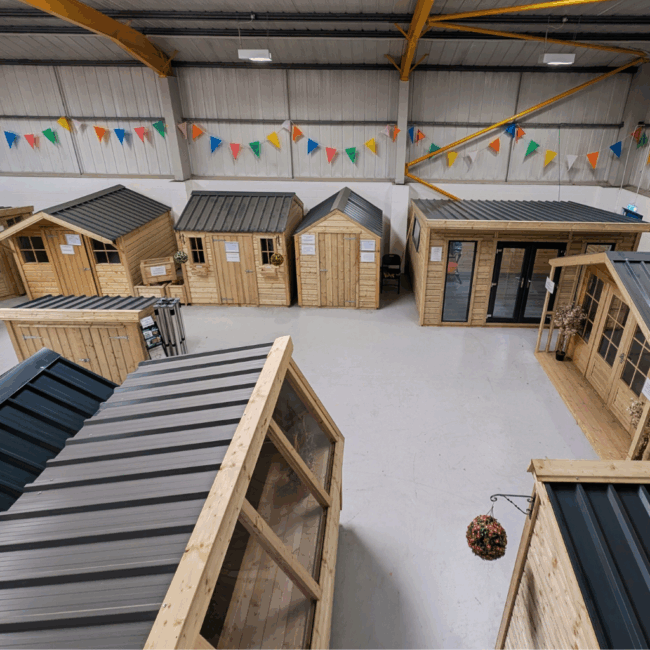
Want to see the difference for yourself? Visit our indoor showroom in Barnsley and look at the roofs up close, or browse our garden sheds online.